
Duct Cleaning in Clinics and Medical Offices in Panama: What Is Documented and What Is Not Promised
Short answer. In a clinic or a medical office, duct cleaning is documented as maintenance of the system: camera inspection, sectors worked on, condition of the air handling unit and the drain, verification at the same points and a report. No health result is promised, because the EPA states that duct cleaning has never been shown to prevent health problems. What is delivered is verifiable evidence of the condition of the system.
In brief
- In a clinic or a pharmacy the cleaning of air systems is expected to be documented, and an intervention without evidence leaves no answer for whoever asks when and how it was done.
- The technical reference is NADCA’s ACR standard for assessment, cleaning and verification, cited as an industry reference and not as a certification of Climatiza (NADCA, ACR 2025).
- What cannot be promised are effects on patients or infections: the literature does not support it (Zuraimi, 2010).
What changes in a clinic or a medical office
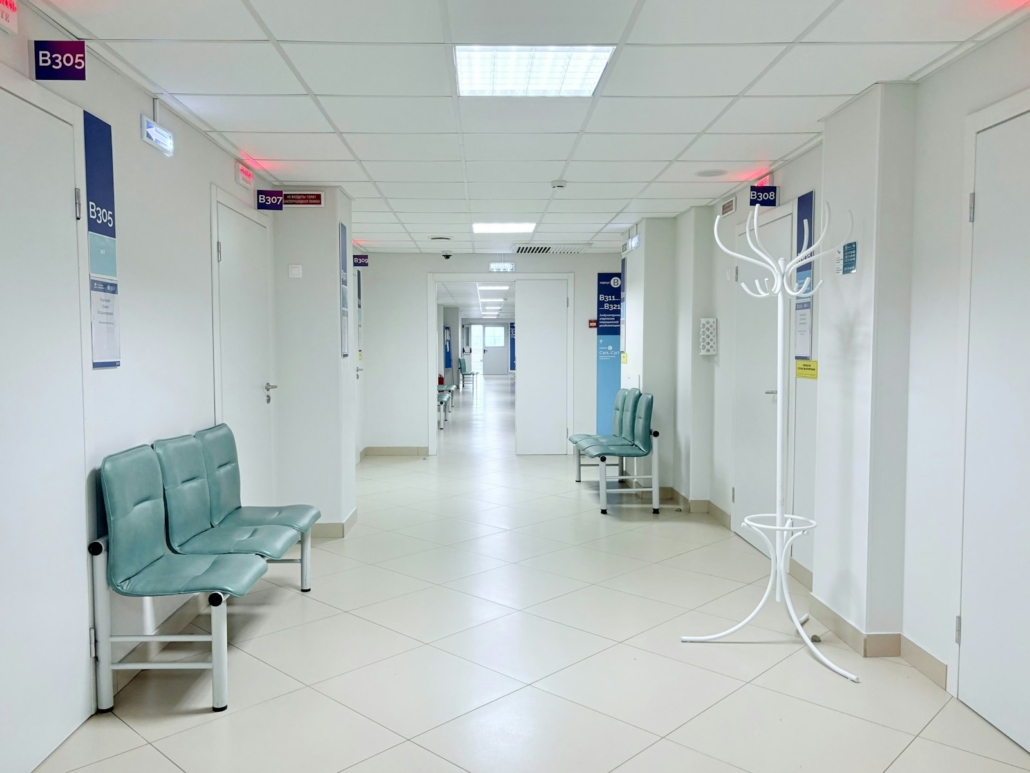
In a healthcare establishment, areas with different uses coexist, such as consultation, waiting, administration or storage, and care cannot stop. That is why the work is organized by sectors and the report is part of the service.
| Situation | What it means for the ductwork | How it is handled |
|---|---|---|
| Continuous care or shifts | There are areas and hours that cannot be interrupted. | Work plan by sectors and schedule agreed with the administration, so that care continues while work goes on. |
| Areas with different uses: consultation, waiting, storage | Not every area is treated the same. Which are critical is defined by the clinic, not by the ductwork provider. | The scope by area is agreed before intervening and recorded in writing. |
| A maintenance record is expected | An intervention without evidence has no answer when someone asks when and how it was done. | A report per intervention with photographs and video of the before and the after at the same points. |
| Equipment that runs almost all year | In Panama, average annual relative humidity is 75.7%, and the pan and the drain work without rest. | Review of the air handling unit, the coil, the pan and the drain in every intervention. |
| What is removed must not pass into occupied spaces | Inadequate vacuum extraction can release more dust than it removes (EPA). | Filtered vacuum extraction and work by sectors. |
The sanitary requirements of each establishment are defined by the relevant authority and by the clinic itself. This article does not replace them: it describes what is done on the air system and what is recorded. The sector detail is on the clinics and pharmacies page.
What is documented in each intervention
- Scope, date and personnel involved, by sector.
- Prior camera inspection, with photographs and video of the initial condition and the location of each point.
- Runs cleaned and grilles or diffusers worked on.
- Findings on the air handling unit, the coil, the condensate pan and the drain.
- Disinfection product applied, if applicable, and sectors treated. The EPA states that no chemical biocides are registered for internally insulated ducts and that little research exists on their effectiveness inside ducts.
- Second camera inspection at the same points and a record of the runs without access, with the recommendation to install access doors.
- Frequency recommendation based on the establishment’s actual use.
NADCA’s ACR standard, in its 2025 edition, covers assessment, cleaning and cleaning verification with the surface comparison test and the vacuum test (NADCA announcement). It is cited as an industry technical reference.
What is not promised and why
A clinical setting is where the temptation to promise health results is strongest. The public evidence does not support them, which is why they are not promised.
| Claim | What the evidence says | Source |
|---|---|---|
| Duct cleaning prevents health problems or infections | The EPA states that duct cleaning has never been shown to prevent health problems. | EPA |
| Cleaning improves air quality, performance or consumption | A literature review concluded that the evidence is insufficient to claim those benefits. | Zuraimi, Indoor Air, 2010 |
| The system ends up sterile | It is not claimed. Disinfection is done with a product suitable for ducts on surfaces that are already clean, and the report records the product and the sectors. | EPA |
| A one-day cleaning solves the system forever | In residential minisplit units in Japan, high-pressure washing reduced the internal fungal load by more than 99%, and a year later it had returned to the previous level. It is a different kind of equipment and is cited as context. | Shiraishi et al., 2023 and 2026 |
Where to look first: unit, drain and filtration
The EPA lists the condensate pans of air handling units among the places with possible hidden mold (EPA, chapter 3) and asks to keep them clean and flowing (chapter 2). In a system that looked clean to the naked eye, 10⁵ to 10⁶ viable bacteria per cm² were counted on the coil fins (Hugenholtz and Fuerst, 1992), a single system cited as a documented example and not as a general finding.
On filtration, a study of 40 large commercial units found that, in warm-humid and hot-dry climates, the microorganisms on the coils depended on the outdoor climate through the dew point, and that low-efficiency filters (MERV 8) were associated with a greater abundance of certain groups of bacteria and fungi than MERV 14 (Bakker et al., Indoor Air, 2020). It is an observed association and not a recommendation of a specific filter.
| Data point | Value | Source |
|---|---|---|
| Average annual relative humidity, Tocumen station | 75.7% | ETESA, Panama’s Climate Center (1977 to 2010, in Spanish) |
| Least humid month (March) | 64.9% | ETESA |
| Most humid month (October) | 82.4% | ETESA |
| Indoor reference | Below 60% and, ideally, between 30% and 50% | EPA |
| Average dew point | About 22.6 °C, between 20.0 °C and 23.8 °C depending on the month | Our own calculation from the ETESA averages, as an order of magnitude |
Where to go next
Limpieza de Ductería is a technical service of Climatiza (site in Spanish). To document the equipment of a clinic, Climatiza offers an air conditioning asset survey and handles air conditioning maintenance (both in Spanish). For clinics that receive patients from other countries, Radar Panamá explains medical tourism in Panama, and the decision on when to clean is developed in air conditioning duct cleaning in Panama.
The same principles of containment and verification are explained for another sector in ductwork in hotels, and how to hand over the report to whoever asks for it in horizontal property buildings.
What this article does not say
Limits. This article describes the working criterion of Limpieza de Ductería and sets it against public references. It does not claim effects on patients’ health or on infections. NADCA is cited as an industry reference and not as a seal of Climatiza. The EPA guides were written for the United States, and the one on duct cleaning is residential.
Frequently asked questions
Does duct cleaning prevent infections in a clinic?
It is not claimed. The EPA states that duct cleaning has never been shown to prevent health problems, and a literature review concluded that the evidence is insufficient. What is delivered is the record of the condition of the system.
Can the work be done with the clinic running?
The work is sectored so that care continues while work goes on, with filtered vacuum extraction so that what is removed is not spread into occupied spaces.
Who defines the critical areas?
The clinic. The scope by area is agreed before intervening and recorded in writing in the report.
What does the clinic receive at the end?
A record by sector, photographs and video of the before and the after at the same points, findings on the air handling unit and the drain, and a frequency recommendation.
How much does it cost?
It depends on the size of the system, its condition and the accessible runs. It is quoted after the inspection result.
Sources
- EPA. Should You Have the Air Ducts in Your Home Cleaned?. Limits on health claims, inadequate vacuum extraction and biocides
- EPA. Mold Remediation in Schools and Commercial Buildings Guide, Chapter 2. Drip pans clean, flowing and free of obstructions
- EPA. Mold Remediation in Schools and Commercial Buildings Guide, Chapter 3. Condensate pans with possible hidden mold
- NADCA. 2025 edition of ACR, the NADCA Standard for Assessment, Cleaning and Restoration of HVAC Systems. Verification with the surface comparison test and the vacuum test
- Zuraimi M. S. Is ventilation duct cleaning useful? A review of the scientific evidence. Indoor Air, 2010. Insufficient evidence to claim benefits
- Hugenholtz and Fuerst. Heterotrophic bacteria in an air-handling system. Applied and Environmental Microbiology, 1992. One system, viable bacteria on the coil fins
- Bakker A. et al. Bacterial and fungal ecology on air conditioning cooling coils is influenced by climate and building factors. Indoor Air, 2020. Outdoor climate, dew point and MERV 8 and MERV 14 filters
- Shiraishi Y. et al. A method to evaluate and eliminate fungal contamination in household air conditioners. Indoor Air, 2023. Fungal load reduction with high-pressure washing
- Shiraishi Y. et al. Fungal load and composition in residential air conditioners recontaminated 1 year after cleaning. Indoor Air, 2026. Recontamination a year later
- ETESA, Panama’s Climate Center. Climate characterization of the Panama and San Miguelito districts (Tocumen station, 1977 to 2010, in Spanish). Relative humidity and temperatures
Does a clinic need a record of its air system? The system is inspected by sectors, each finding is documented and one report per intervention is delivered.

