
Why Does My Office Air Conditioning Smell Damp?
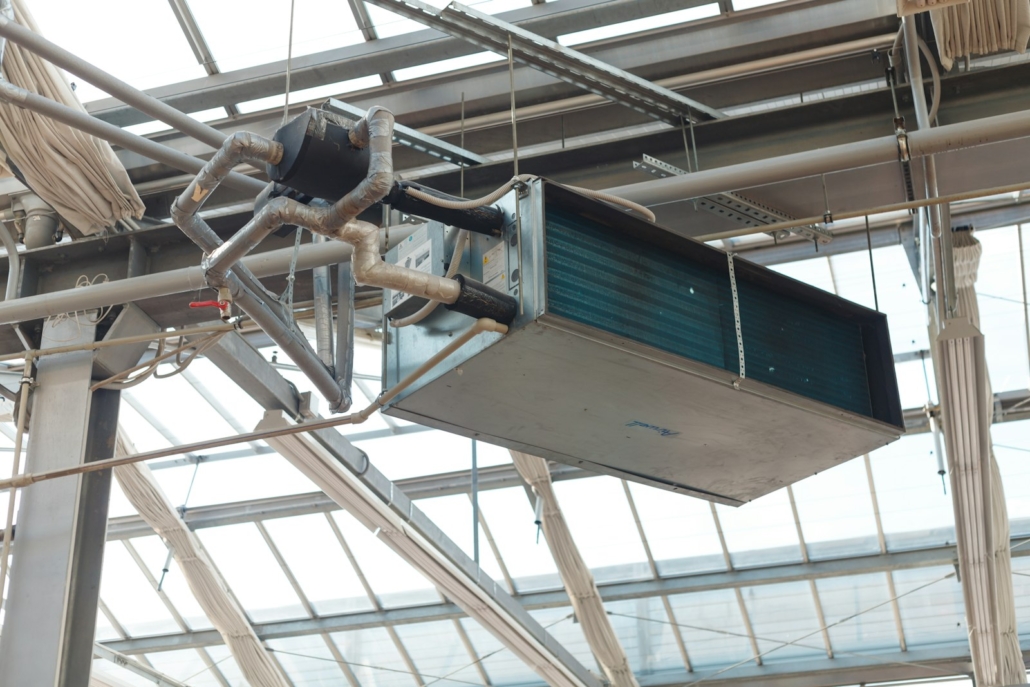
Short answer. A damp smell means some component of the system stays wet. The first points to check are the condensate pan, the coil and the drain, which the EPA lists among the places with possible hidden mold. Ventilating or changing only the filter does not always solve the source, which is why the system is inspected before cleaning.
In brief
- The smell is usually noticed when the unit starts, as air passes over components that stayed wet.
- The EPA states that the key to mold control is moisture control, and asks to keep drip pans clean and drain lines free (brief guide).
- In Panama no month averages less than 64.9% relative humidity, so the system condenses water all year (ETESA, in Spanish).
Where the source usually is
This table orders the points that are checked, from the unit toward the ducts, with what is observed and the reference that supports each check.
| Possible source | What is observed | Reference |
|---|---|---|
| Condensate pan with standing water or a blocked drain | Water in the pan, dripping or stains around the unit, and a smell when the unit starts. | EPA, chapter 2: pans clean, flowing and free of obstructions. |
| Coil with film or dirt | Fins with residue. In a system that looked clean, 10⁵ to 10⁶ viable bacteria per cm² were counted on the coil fins. | Hugenholtz and Fuerst, 1992, a single system cited as an example. |
| Wet internal insulation | Fiberglass liner that is wet or moldy. It cannot be effectively cleaned and should be removed and replaced. | EPA |
| Condensation on ducts or pipes | Surfaces colder than the dew point of the surrounding air, which in Panama is around 22.6 °C as an annual mean. | Our own calculation from the ETESA averages, as an order of magnitude |
| Saturated or damp filters | Filters with deposits or moisture, or with an overdue change. | Limpieza de Ductería criterion |
| High ambient humidity | Outdoor air arrives with a humidity the system cannot bring down to the indoor range. | EPA: indoors below 60%, ideally between 30% and 50%. |
Why in Panama the smell comes back
Average annual relative humidity at the Tocumen station is 75.7%, the least humid month (March) averages 64.9% and the most humid (October) 82.4% (ETESA, Panama’s Climate Center, 1977 to 2010, in Spanish). With no off season, the coil condenses water almost every time the unit cools, and a drain that fails or a pan that holds water becomes the source of moisture.
Video by Climatiza Panamá on YouTube (in Spanish). Watch on YouTube
If that source is not corrected, the EPA states that growth returns even if it is cleaned. That is why cleaning the ducts without checking the pan and the drain leaves the problem where it was.
What the administration can do while the inspection is pending
- Note the floor, the time and whether the smell appears when the unit starts or stays.
- Check for dripping, stains or damp tiles in the dropped ceiling and around the unit.
- Do not use air fresheners as a solution: they mask the smell and do not correct the source.
- If there is visible mold or a well-founded suspicion that the system is contaminated, report it before using it further. The EPA states not to operate an HVAC system known or suspected to be contaminated with mold (chapter 3).
- Request a camera inspection, which checks the unit and the accessible runs and delivers a report with photographs.
The criteria with which the inspection decides whether cleaning is needed are in air conditioning duct cleaning in Panama, and the detail of the evidence on mold in humid climates is in mold in ducts in a tropical climate.
Where to go next
Limpieza de Ductería is a technical service of Climatiza (site in Spanish). Its guide on air conditioning that smells of damp or mold describes the most visible signs, and the one on air conditioning that drips water in the dropped ceiling covers dripping (both in Spanish). Radar Panamá published a guide on what to check when an office air conditioner is not cooling.
Limits. This article describes possible causes and how to check them, not a diagnosis of any building. The EPA states that duct cleaning has never been shown to prevent health problems, which is why no health claims are made. The EPA guides cited are residential or for schools and commercial buildings, depending on the document, and are taken as a reference.
Sources
- EPA. A Brief Guide to Mold, Moisture and Your Home. Moisture control, drip pans and indoor humidity below 60%
- EPA. Mold Remediation in Schools and Commercial Buildings Guide, Chapter 2. Drip pans clean, flowing and free of obstructions
- EPA. Mold Remediation in Schools and Commercial Buildings Guide, Chapter 3. Condensate pans with possible hidden mold and not operating a contaminated system
- EPA. Should You Have the Air Ducts in Your Home Cleaned?. Wet fiberglass insulation and correcting the cause of moisture
- Hugenholtz and Fuerst. Heterotrophic bacteria in an air-handling system. Applied and Environmental Microbiology, 1992. One system, viable bacteria on the coil fins
- ETESA, Panama’s Climate Center. Climate characterization of the Panama and San Miguelito districts (Tocumen station, 1977 to 2010, in Spanish). Relative humidity
Does the office smell damp when the air conditioning starts? The unit and the accessible runs are inspected and a report with photographs is delivered to decide what is needed.

