How to Choose an Air Conditioning Duct Cleaning Company in Panama
Short answer. Duct cleaning companies are compared on what can be verified: whether the scope covers the air handling unit and access points, whether vacuum extraction is filtered, whether a camera checks the same points before and after, and whether the report documents it. Limpieza de Ductería works this way, and the EPA says not to hire those who promise health benefits.
In brief
- Scope comes first: whether the air handling unit is included, which access points are opened and what material each run is. According to the EPA, leaving one component uncleaned can recontaminate the whole system (EPA).
- The method comes down to two questions, how the material removed is captured and how the result is verified: filtered vacuum extraction and a camera at the same points before and after.
- What a company says also counts. The EPA advises against hiring those who make sweeping health claims or present cleaning as routine maintenance.
Scope is compared first
Two companies can call very different jobs “duct cleaning”, so before the method it helps to fix what is in the job.
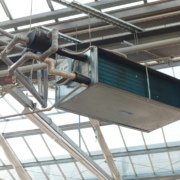
- The air handling unit. The EPA notes that leaving one component of a contaminated system uncleaned can recontaminate the whole system, and its checklist includes the coil, the condensate pan with its drain and the blower (EPA).
- The access points. The EPA says to open access ports or doors so the entire system can be cleaned and inspected. Runs without access cannot be cleaned or verified, and they should be recorded.
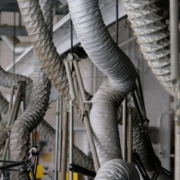
- The material of each run. Sheet metal, flexible duct or fiberglass: the EPA states that cleaning methods vary with the material.
- Sectors and hours. In an occupied building the work is organized by sectors, and the scope is set after the inspection.
The EPA also suggests talking to at least three providers, asking for written proposals, checking that they have worked on similar systems and getting a written agreement that describes the scope before the work begins (EPA).
What to ask and what the report should answer
Each question needs an answer that can be read in the report and not only heard during the visit.
| What to ask | What the report should answer | Reference |
|---|---|---|
| What does the scope include? | Runs, grilles and diffusers, air handling unit and sectors, with the material of each run. | EPA: clean all components of the system. |
| How is the material removed captured? | Mechanical brushing with filtered vacuum extraction, and where the equipment exhausts. | EPA: contact vacuum cleaning exhausting outside or HEPA filtration. |
| How is it verified? | Photographs and video from a camera at the same points before and after. | EPA: visual inspection and remote photography. NADCA: verification tests. |
| Which access points were opened and how were they closed? | The location of each access point, whether it already existed or was opened, and how it was closed. | EPA: access holes sealed and re-insulated, fastened with more than tape. |
| What was applied inside the duct? | Product, label, surface and sectors. If sealants were used, where and why. | EPA: understand the pros and cons of biocides and sealants. |
| What was left uncleaned and unverified? | A list of runs without access, with the recommendation to install access doors. | Limpieza de Ductería criterion. |
| What justifies cleaning? | Photographs of the initial condition showing what motivates the cleaning. | EPA: ask to be shown the contamination that would justify it. |
| Who owns the report? | The client, who can use it with any provider. | Limpieza de Ductería criterion. |
Method and verification: the two answers that weigh most
On the method, the useful question is where the material removed goes. According to the EPA, an inadequate vacuum collection system can release more dust than was there to begin with, and in a study of eight homes particles and bioaerosols were higher during cleaning than before or after (Ahmad et al., 2001). A description that only talks about running equipment through the ducts and does not say how the material removed is captured leaves that question unanswered.
On verification, what counts is that the same places are looked at before and after. If the photographs of the after are of other runs, no comparison is possible, and that is why Limpieza de Ductería uses the same points. The EPA, for its part, asks for several randomly chosen sites on the return and supply sides, with no debris visible to the naked eye (EPA). NADCA’s ACR standard, 2025 edition, names the surface comparison test and the vacuum test as verification methods (NADCA), an industry technical reference and not a seal of any company.
What the company says and what it does not promise
What a company claims can also be checked. The EPA guide lists warning signs, and this table pairs them with what the same guide says (EPA).
| If the proposal says | The public reference states |
|---|---|
| That cleaning protects health | The EPA advises against hiring those who make sweeping claims about health benefits, because they are unsubstantiated, and states that duct cleaning has never been shown to prevent health problems. |
| That ducts must be cleaned on a schedule as maintenance | The EPA advises against hiring those who recommend cleaning as a routine part of maintenance. It considers cleaning only as needed. |
| That the company is EPA certified | The EPA says to be wary of that claim: it does not set duct cleaning standards or certify, endorse or approve companies. |
| That contamination is demonstrated with a culture plate | The EPA calls it inappropriate: microorganisms are always present in the air and some growth on a plate is normal. |
| That there is mold, without showing it | The EPA says to ask to be shown. Many sections of the system may not be accessible for visual inspection, and confirming that a substance is mold may require laboratory analysis. |
| That a biocide or a sealant will be applied | The EPA asks to understand the pros and cons before allowing it, and for the provider to show visible evidence of growth before a biocide. Sealants never over active mold, wet liner or debris. |
How it should be documented
- Scope by sector, date and personnel involved.
- Photographs and video of the initial condition, with the location of each point.
- Runs cleaned, grilles and diffusers worked on, and findings on the air handling unit and the drain.
- Access points opened or used, and how they were closed.
- Product applied and sectors treated, if there was disinfection, and the reason for any sealant or coating.
- Photographs and video of the after, at the same points.
- Runs without access, with the recommendation to install access doors and when to inspect again.
With that document, two proposals can be placed side by side on the same scope. The guide how to compare two duct cleaning quotes develops it from the side of the proposal, and access doors in ductwork explains why access points matter.
Where to go next
Limpieza de Ductería is a technical service of Climatiza (in Spanish). The decision about a maintenance contract for the equipment is a different conversation: Climatiza covers it in how to choose an air conditioning maintenance contract (in Spanish) and Radar Panamá in air conditioning maintenance contracts for businesses. To see how the work varies by building type, see corporate offices, horizontal property buildings and the duct cleaning service, and to know when cleaning is warranted, air conditioning duct cleaning in Panama.
Limits. This article does not name or compare companies. The EPA guide is residential and from the United States: it mentions state licenses and consumer offices that do not carry over to Panama, so only what applies to the way the work is done is used. Kitchen hoods and exhaust ducts are a different service, which Climatiza covers in duct and kitchen hood cleaning (in Spanish).
Frequently asked questions
What should an air conditioning duct cleaning company include?
A scope that covers the accessible ducts, the grilles and the air handling unit, filtered vacuum extraction, camera verification at the same points before and after, and a report listing the runs without access. The EPA warns that leaving one component uncleaned can recontaminate the system.
Which promises should raise doubts?
According to the EPA, sweeping health-benefit claims, cleaning offered as routine maintenance and anyone claiming EPA certification, since the EPA does not certify companies. Demonstrating contamination with a culture plate is not convincing either, and the EPA calls it inappropriate.
How is it checked that the work was done?
With photographs and video of the before and the after at the same points, and with the report. The EPA asks that all parts be visibly clean, with no debris visible to the naked eye, and that the provider show each component when the job is finished.
Can the report be used to compare with another company?
Yes. The report belongs to the client and sets a common scope: runs, air handling unit, access points and verification. With that document, two proposals are compared on the same basis, and the client can use it with any provider, including ones other than Limpieza de Ductería.
Sources
- EPA. Guidance on whether to have the air ducts in a home cleaned (EPA indoor air quality page). Scope, access points, vacuum extraction, visual verification, warning signs when choosing a provider, biocides and sealants
- NADCA. Announcement of the 2025 edition of ACR, The NADCA Standard for Assessment, Cleaning and Restoration of HVAC Systems. Verification with the surface comparison test and the vacuum test
- Ahmad I. et al. Effectiveness of HVAC duct cleaning procedures in improving indoor air quality. Environmental Monitoring and Assessment, 2001. Particles and bioaerosols before, during and after cleaning in eight homes
Is a proposal with scope and verification in writing needed? The system is inspected by camera, the condition is documented and the report fixes what is cleaned, how it is verified and what is left without access.